A story from Shervoid, on Robinhood Chain
The last arrow never came down.
Kirklees
In one version of the old ballad, Robin Hood lies dying at Kirklees. He asks Little John for his bow and lets one last arrow fly from the window. Where it is taken up, he says, there his grave should be dug.
English longbows were cut from yew. The same dark trees stand in old British churchyards, long linked with death and with a life that does not end.
Through the glass
This arrow never came down. It flew into a mirror and kept going, out of the ballad and into a place the ballad never mentions.
That place is Shervoid, the forest on the far side of the glass, where forgotten things end up. Nobody there dug a grave where the arrow was taken up. A yew grew instead, and one night the yew let someone out.
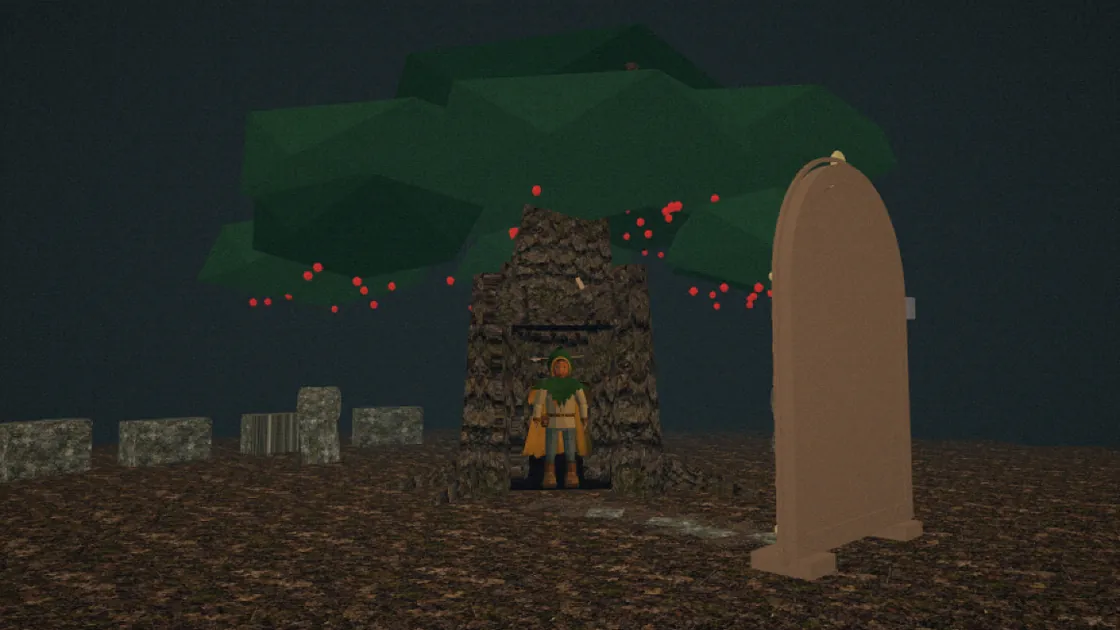
The one who walked out
He is young, with a hood and a short cape of dark yew needles, and the last arrow runs through the hood like the feather in a cap. The first thing he does is look at his hands, as if somebody had just lent them to him.
His name:
A name, not yet
He doesn’t remember it himself, and the glass won’t tell. On this side of it he is simply the wanderer.
left on the glass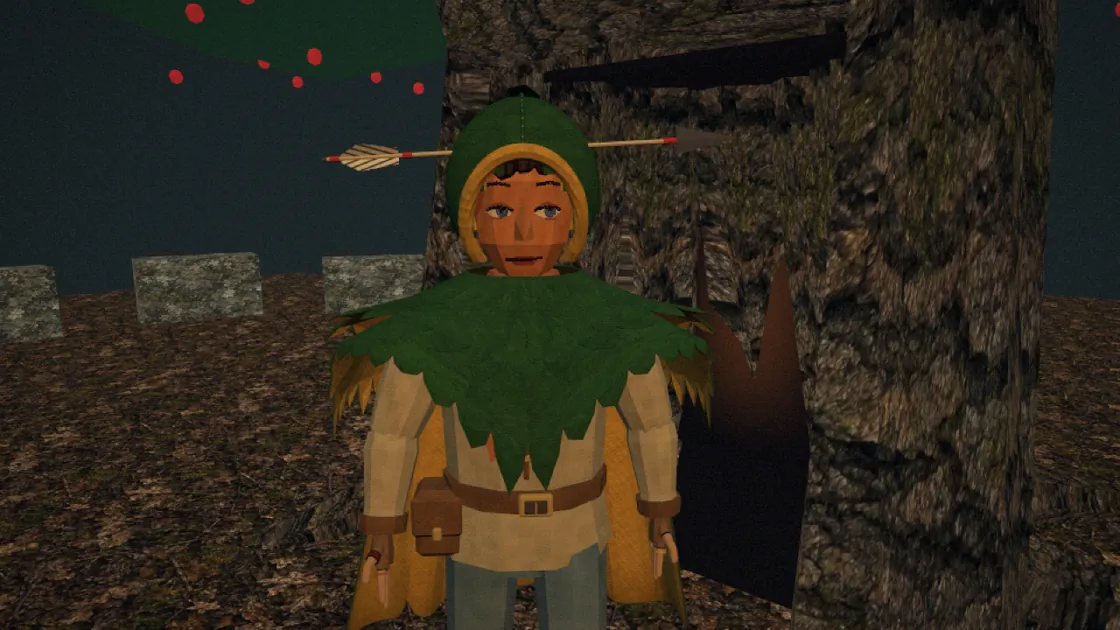
The looking glass
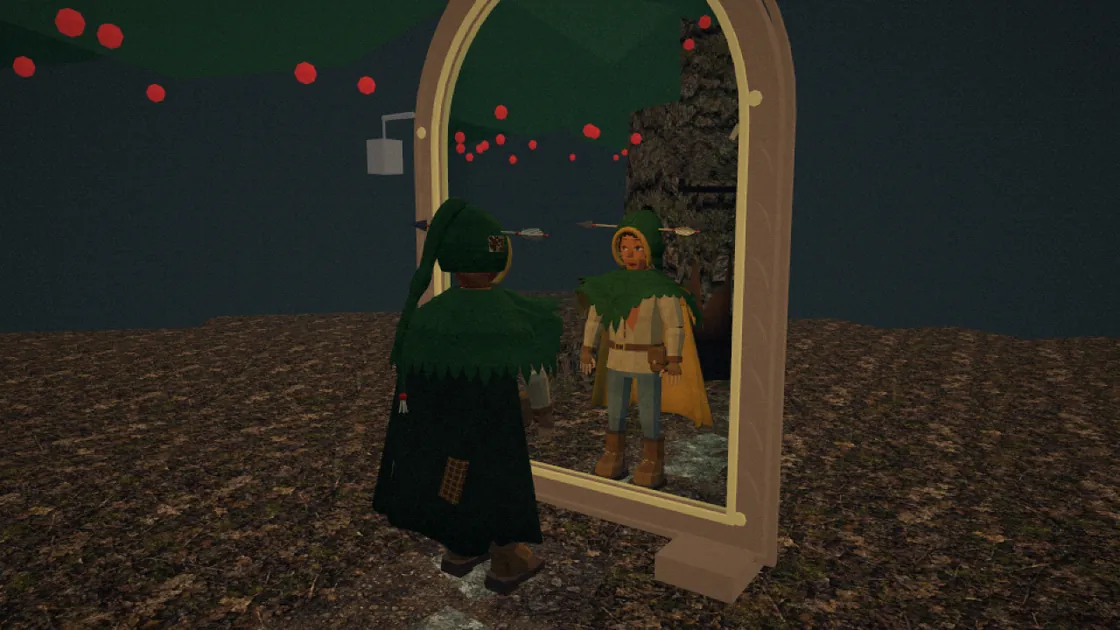
He has never seen his own face. An old looking glass stands on the path, and when he stops in front of it, the eyes looking back are yours.
He reaches for the arrow, and so does the one in the glass. It comes out of the hood slowly, on both sides at once, and it is lighter than he expected. He touches the glass with the tip. On the other side the same tip touches back, and the glass lets you through.
The ticket hall
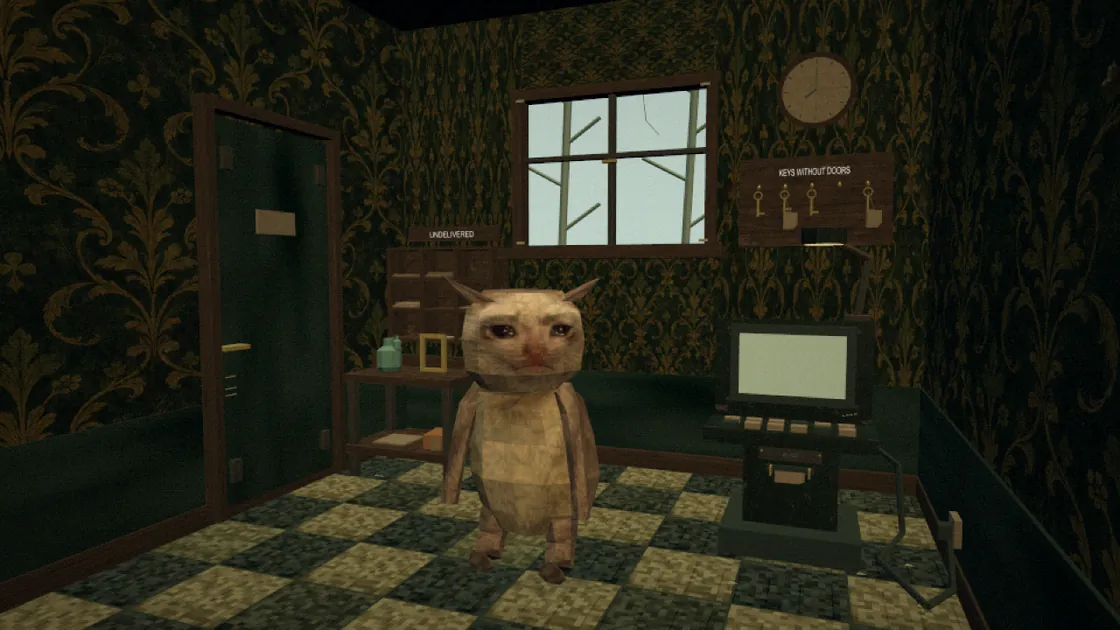
Behind the glass it is night. CashCat, a sad grey cat, keeps the counter of a hall full of tickets nobody came to collect. He looks up from his terminal as if he had been expecting you. “You came back. I kept the blank one for you.”
You have never been here before. The ticket he slides across has room for a name and no destination, and nobody in the hall seems surprised by either.
The road
From the hall the road runs through nine places, and each of them keeps something that lost a piece on its way here: a page with its middle gone, a table set for a guest who never came, an answer waiting for its question, a film one frame short. Thirty residents look after these things. They stop what they are doing to say hello, and each of them punches a hole in your ticket.
Where the arrow comes down
At the top of the road the stars have already fallen. They lie cooling in shallow trays on the floor of an observatory, and a courier bird has brought a folded paper star, notched twice along its edge. The notches fit a window with no outside to it.
Beyond that window, above the sky, it is getting light. The keeper of thresholds waits on the step of his stone house, and a doorman in a black helmet holds the window open. Through it you can see the looking glass where all of this began.
That is where the last arrow finally comes down. This time nobody digs a grave. Your ticket asks for a name, and it prints yours.
His own name is still somewhere on the other side of the glass.
The ballad and the churchyard yews are folklore and history. Everything after the arrow enters the glass is our fiction, and the keeper of thresholds is a fan tribute with no part in this project.
Sources: the ballad, Child 120 · yews in English churchyards